What Is an HVAC Economizer and How Does It Work?
An HVAC economizer is a system that allows commercial HVAC equipment to use cool outdoor air instead of relying solely on mechanical cooling. When outdoor conditions are favorable, the economizer brings in more outside air to help maintain indoor temperatures while reducing compressor runtime and energy use.
How an HVAC Economizer Works
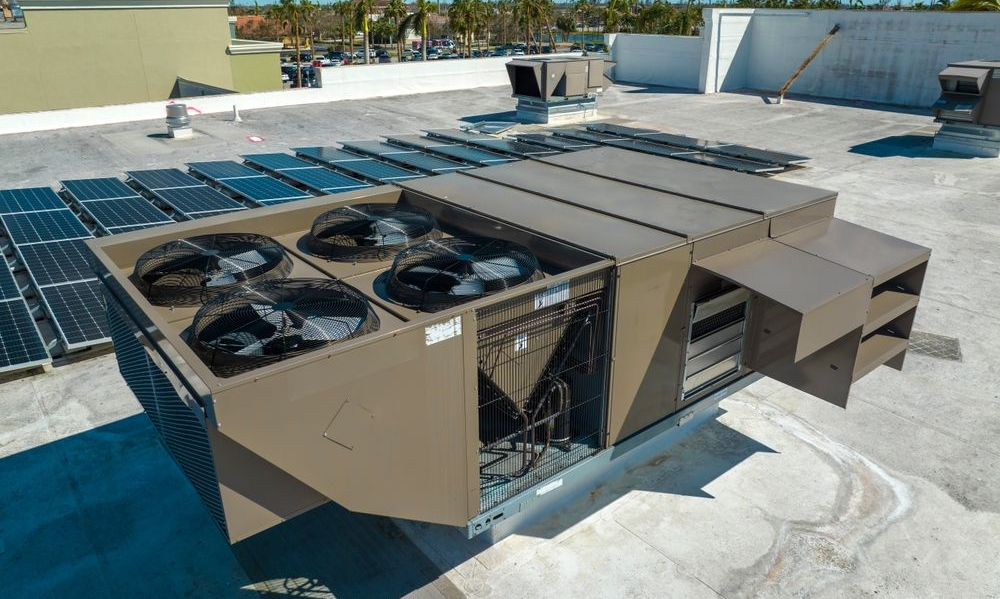
On a commercial rooftop unit, an HVAC economizer uses outdoor and return air sensors to determine when outside air can provide efficient cooling. When conditions are favorable, the controls open the economizer damper, bringing more outdoor air into the mixed air chamber where it combines with return air.
If outdoor air can meet the cooling demand, the compressors may remain off. When conditions become too warm or humid, the damper returns to its minimum ventilation position and mechanical cooling takes over. This changeover happens automatically based on the economizer’s programmed controls.
The Four Types of HVAC Economizers
HVAC economizers are typically categorized by how their controls determine whether outdoor air is suitable for cooling.
Dry-Bulb Economizer
A dry-bulb economizer uses outdoor temperature to determine when to enable economizer cooling.
Single Enthalpy Economizer
A single enthalpy economizer considers both the temperature and moisture content of outdoor air.
Differential Enthalpy Economizer
This system compares outdoor air enthalpy with return air enthalpy and uses outside air when conditions are more favorable.
Integrated Differential Enthalpy Economizer
An integrated differential enthalpy economizer can use favorable outdoor air and mechanical cooling together when outside air alone cannot meet the building’s cooling demand.
What an Economizer Does for a Commercial Building
A properly functioning HVAC economizer can reduce energy use while supporting the performance and longevity of commercial cooling equipment.
Lower Cooling Costs During Shoulder Seasons
During mild spring and fall weather, an economizer can use cool outdoor air to meet part or all of the building’s cooling demand, reducing the need for compressor operation.
Fresher Indoor Air From Higher Outside Air Volume
When conditions are suitable, economizer operation increases the amount of outdoor air entering the HVAC system, providing greater fresh-air exchange.
Easier Path to Energy Code Compliance
Economizers are required for many commercial HVAC applications under current energy codes. A properly selected and commissioned system can help a building meet applicable efficiency requirements.
Longer Rooftop Unit Service Life
Reducing unnecessary compressor runtime can help limit stress on key components and support a longer rooftop unit service life.
Reduced Compressor Runtime and Wear
Using outdoor air for cooling means compressors can run less frequently, reducing operating hours and associated wear.
How Much an Economizer Can Save
The savings from an HVAC economizer come primarily from reducing compressor runtime. For example, the compressors on a 10-ton rooftop unit may draw roughly 8 to 10 kW, while the supply fan alone may draw less than 2 kW. When favorable outdoor air handles the cooling load, that can mean approximately 6 to 8 kW of avoided electricity use per hour.
At an illustrative commercial electricity rate of $0.12 per kWh, 500 hours of economizer cooling could save roughly $360 to $480 per year, per unit. Actual savings vary with climate, utility rates, equipment size, cooling loads, and operating hours. Larger rooftop units and buildings with extended schedules may see greater savings.
When Energy Code Requires an Economizer
Under the IECC, economizers are required for many commercial cooling systems, with 54,000 Btu/h (4.5 tons) serving as an important capacity threshold in the code. Requirements and exceptions vary based on factors such as equipment type, climate zone, building use, and the energy code adopted locally.
For building owners and facility managers, the practical takeaway is simple: if you are installing or replacing a commercial rooftop unit at or above 4.5 tons, an economizer should be part of the code-compliance discussion. Your HVAC contractor can verify the requirements for your specific equipment and jurisdiction.
Signs Your Building Would Benefit From an Economizer
Certain commercial buildings have more opportunities than others to take advantage of economizer cooling.
Long Shoulder Seasons With Mild Outdoor Temperatures
Extended periods of mild spring and fall weather create more hours when outdoor air can provide cooling.
High Internal Cooling Loads
Buildings with significant heat from equipment, lighting, or occupants may need cooling even when outdoor temperatures are relatively low.
High Outside Air Ventilation Requirements
Facilities that require greater outdoor airflow may have additional opportunities to use that air for cooling when conditions are favorable.
Larger Rooftop Unit Tonnage
Larger rooftop units generally use more energy for mechanical cooling, increasing the potential value of reducing compressor runtime.
Extended Hours of Operation
Buildings operating early mornings, evenings, or long daily schedules may encounter more hours when outdoor conditions are suitable for economizer cooling.
Why Economizers Often Stop Working Without Anyone Noticing
A failed HVAC economizer may not cause an obvious comfort problem. If it stops providing outside-air cooling, the compressors simply pick up the load. The building stays comfortable while the expected energy savings quietly disappear.
Common problems include seized economizer dampers or actuators, drifting or poorly calibrated sensors, and incorrect
control settings. In some cases, economizers are locked at their minimum outdoor air position after recurring comfort complaints rather than being properly repaired. This effectively turns them into fixed ventilation dampers.
Periodic economizer audits and fault detection and diagnostics (FDD), where available, can uncover these hidden problems before they lead to years of unnecessary energy use.
What a Properly Installed and Commissioned Economizer Looks Like
Commissioning should not be treated as optional. Research cited by the New Buildings Institute involving more than 500 rooftop units found that nearly two out of three had malfunctioning economizers. For building owners, this highlights an important point: having an economizer installed does not guarantee it is working correctly.
Before signing off on a new installation, ask your HVAC contractor to demonstrate the following:
Temperature and Humidity Sensor Calibration
Confirm that the sensors are calibrated and providing accurate readings so the economizer responds to actual outdoor conditions.
Damper Actuator Full-Range Test
Ask to see the economizer damper travel through its full operating range without sticking, binding, or stopping short.
Changeover Setpoint Verification
Have the contractor verify the dry-bulb or enthalpy setpoint that determines when economizer cooling activates.
Minimum Outdoor Air Damper Position
Confirm that the minimum damper position is properly set to meet the building’s ventilation requirements.
Fault Detection and Diagnostics Verification
Where applicable, ask the contractor to demonstrate that fault detection and diagnostics can identify sensor, damper, and other economizer control problems.
How 1 Source Mechanical Handles Commercial Economizer Service and Installation
An economizer only delivers value when its sensors, dampers, controls, and rooftop unit are working together correctly. 1 Source Mechanical specializes in commercial rooftop HVAC and has union-trained technicians with an average of 20 years of industry experience.
Our team can inspect existing economizers, diagnose performance issues, and install properly configured systems as part of a commercial rooftop unit project. We focus on making sure the equipment operates as intended and meets applicable code requirements.
Not sure your economizer is working properly? Planning a rooftop unit replacement?
Request an economizer audit or a quote from 1 Source Mechanical today.